
What is the Freemium Business Model?
BUSINESS MODEL
Stackari
17 min read
Heads up: a few links are affiliate links, and some include special offers you won’t want to miss.
Freemium has become one of the most popular business models for digital products and SaaS companies.
From Dropbox to Spotify to Canva, many tech giants rely on this model to attract users, build brand recognition, and eventually convert a portion of free users into paying customers.
In this guide, we will explore how the freemium model works, why it appeals to founders, its pros and cons, and how to implement it effectively.

What is a Freemium Business Model?
The freemium model provides users with a free, limited version of a product while offering premium features or higher usage tiers when users upgrade. This approach makes it easy for users to try the product without risk, and many eventually pay for the additional features.
Examples:
Dropbox: Gives users 2GB of free cloud storage. As users need more space or collaboration tools, they upgrade to paid plans.
Spotify: Lets people stream music for free with ads and limited features. Users then pay for Premium plan to removes ads, allows offline listening, and improves audio quality.
Canva: Lets users design graphics and presentations for free but premium features like templates, brand kits, and stock images only available in paid plan.
Freemium works especially well for digital products because once the product is built, letting more people use the free version doesn’t cost much. This means the company can grow its user base quickly without spending a lot more money.

How the Freemium Model Works
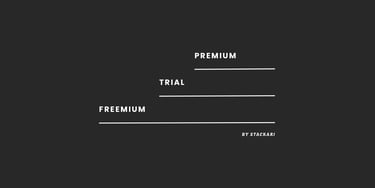
The freemium model brings users in with a genuinely useful free version and then encourages them to upgrade once they see the value. Over time, as users rely on the product more, they naturally reach the limits of the free plan and upgrade their plans.
Conversion Rate Insight:
Most freemium products convert around 2 to 5 percent of users into paying customers. This might sound small, but with a large free user base, even a small conversion percentage translates into strong revenue.
Companies like Dropbox, Spotify, and Notion scaled by attracting millions of free users, then optimizing the upgrade journey.
Example:
A product with 100,000 free users and a 3 percent conversion rate will have 3,000 paying customers. At ten dollars per month, that becomes thirty thousand dollars in monthly recurring revenue — powered entirely by a small fraction of users choosing to upgrade.
Why Freemium Converts Users
Freemium works because the free tier gives users real value but also sets reasonable limits that encourage them to upgrade. These limits aren’t tricks; they simply reflect that advanced features cost money to maintain. But they’re also smart conversion drivers.
Here are some common examples:
Watermarks on exported videos
Apps like CapCut and many design tools allow free users to edit content but place a watermark on the final export. Users who want a clean, professional result often upgrade.
Storage limits
Dropbox, Google Drive, and many cloud tools offer a free amount of storage that users eventually fill. Once they run out of space, upgrading becomes the easiest solution.
Usage caps
AI tools, design software, and email platforms often limit the number of exports, downloads, or monthly actions. Heavy users naturally convert when they reach these caps.
Premium-only features
Advanced editing tools, analytics, automation, team collaboration, and AI enhancements often sit behind paywalls.
These limitations act as gentle nudges. They never stop users from trying the product, but they give clear reasons to upgrade once the user starts to rely on it.
Key Components of a Freemium Model
1. Free Tier
The free plan provides core value and helps users build a habit. It shows what the product can do without overwhelming them.
2. Premium Tier
The paid tier unlocks advanced features, higher limits, or better performance. It’s designed to make meaningful improvements to the user experience.
3. Conversion Funnel
This includes onboarding, in-app prompts, reminders, and personalized messaging that explains why upgrading is worth it.
4. Retention Mechanisms
To keep paying customers long term, companies add regular updates, new features, personalized experiences, and helpful customer support.

Pros and Cons of the Freemium Model
Pros
1. Scalable Growth
Because serving additional digital users costs very little, freemium businesses can grow quickly. This makes it easier to build a large audience without heavy upfront spending or infrastructure. A bigger audience also means more users may upgrade their plans later.
2. Valuable User Data
A large free user base generates insights about behavior, feature usage, and customer needs. This information helps founders refine the product, improve onboarding, and decide which features to offer in free vs. paid tiers.
Example:
Duolingo studies usage recognize patterns from its free users to adjust lesson difficulty and design paid features like “Mistakes Review.”
3. High Upsell Potential
Free users often convert once they see value or hit a usage limit. This creates a natural funnel to sell premium plans, add-ons, or enterprise-level solutions.
Example:
Canva lets anyone design for free but charges for premium templates, brand kits, and background removal, driving strong conversions.
4. Marketing Efficiency
Freemium products often grow through referrals, social sharing, and word-of-mouth, reducing the need for expensive paid advertising. The product itself becomes a main driver of user acquisition.
Example:
Dropbox famously gave extra free storage to users who referred friends, creating a viral growth loop.
5. Customer Feedback Loop
Engaged free users provide feedback, bug reports, and ideas that help shape future releases. This continuous input shortens development cycles and supports a product-led growth approach.
Cons / Challenges
1. Low Conversion Rates
Typically, only 1–5% of free users upgrade to paid plans. To be profitable, companies need either a very large user base or strong demand for premium features.
2. Infrastructure Costs
Even if serving one user is cheap, hosting millions of free accounts can be expensive. Poor cost management can hurt profitability.
Example:
Twitter’s massive free user base drove high server and operational costs.
3. Potential Abuse
Some users may create multiple free accounts or misuse the platform, causing unnecessary server load, support requests, or security issues.
Example:
During the pandemic, Zoom free accounts were exploited for spam and disruptive meetings, requiring extra investment in security.
3. Revenue Dependence on Paying Users
Since most revenue comes from a small fraction of users, sustainability depends on converting, retaining, and continuously providing value to free plan users. If premium adoption drops, the business can quickly become unprofitable.
4. Balancing Value
Offering too much for free reduces incentive to upgrade, while offering too little can discourage sign-ups. Finding the right balance takes constant testing.
Example:
YouTube Premium struggles to convert users because the free version already provides extensive content.
Key Takeaway:
The freemium model is a powerful way to grow a digital product by offering a free tier to attract users and a premium tier to generate revenue. Its main advantages are rapid user growth, valuable insights from a large audience, and strong upsell potential.
However, it comes with challenges: low conversion rates, infrastructure costs, potential abuse, and reliance on a small segment of paying users.
Success in freemium depends on balancing the value of the free product with the appeal of premium features, using data to refine offerings, and continuously engaging users to maximize conversions. When executed well, it can scale efficiently and become a major driver of long-term growth.
Subscribe to our newsletter


Enjoy exclusive special deals available only to our subscribers.

Why Founders Often Choose Freemium Models
Founders choose freemium when they know people need to use the product first before they understand its value. Instead of asking users to pay upfront, freemium lets the product prove itself.
It Works Best for Digital Products People Learn by Using
Freemium is a good fit for apps, software, and online tools. These are products where reading a sales page is not enough. Once people try the product, the value becomes clear.
Tools like design apps, note-taking tools, learning platforms, and team software are good examples. The more you use them, the more useful they feel.
It Removes the Fear of Paying Too Early
Many people hesitate to pay for something they do not fully understand yet. Freemium removes that fear.
By offering a free version, founders give users time to explore, test, and see if the product fits their needs. Once users rely on it, paying feels like a natural step, not a risk.
It Helps New Products Get Users Faster
New businesses often struggle because nobody knows or trusts them yet. Freemium makes it easier to get early users because there is no cost and no pressure.
As more people use the product, it slowly builds trust. Seeing others use it makes new users more confident to try it too.
It Grows Through Sharing and Word of Mouth
Freemium products often spread when users share links, files, or invites. The product travels with the work people create.
When someone receives a shared file or invite, they experience the product directly. This kind of growth feels natural and often works better than ads.
A Large Free User Base Becomes an Advantage
Having many free users helps founders understand what people actually want. They can see which features are used the most and where users get stuck.
This makes it easier to improve the product and decide what should stay free and what should be paid.
It Supports Long-Term Growth
Founders who choose freemium usually want the product to drive growth on its own. Instead of pushing sales early, they focus on building something people enjoy using.
Over time, loyal users upgrade because the product has become part of their daily routine.
Simple Takeaway
Founders choose freemium when their product is easier to understand by using than by explaining. It helps attract users, build trust, spread naturally, and turn free users into paying customers over time. For the right digital product, freemium is not just pricing. It is a growth strategy.

How to Validate if a Freemium Model Fits Your Business
Customer Research
Start by talking to potential users to understand what they value. Ask whether a free tier would motivate them to try the product and what features they would expect to pay for. This helps you confirm if there is genuine interest in both the free and premium sides of your offer.
Landing Page Testing
Create a simple landing page that explains your free tier and highlights the premium upgrades. Use it to measure interest through sign-ups, email captures, or button clicks. This quick test shows whether people are attracted to the freemium structure before you invest in full development.
Minimum Viable Product (MVP)
Build a basic version of your product with only the essential features. Let users explore the free experience and gather feedback on what they enjoy, what confuses them, and what they would pay for. An MVP helps you learn how users behave in a real environment.
Track Metrics
Watch indicators like sign-up numbers, active usage, and how many users move to the premium tier. These metrics reveal demand, product stickiness, and potential revenue. Strong engagement and a clear upgrade path suggest freemium could be a good fit.
Tools and Platforms to Support a Freemium Model
No-Code Tools
If you’re building a freemium product without a full engineering team, no-code platforms can help you move fast. You can launch early, test ideas, and validate demand before putting in heavy development costs.
Bubble: Lets you build full-fledged web apps with user accounts, dashboards, and permission-based features. Perfect for creating free vs. paid access levels.
Softr: Ideal for client portals, internal tools, and membership-style products. You can easily set which features belong to the free tier and which require an upgrade.
Glide: Great for building mobile apps with usage limits. For example, free users might get three exports per month, while paid users get unlimited access.
These no-code platforms help you test your freemium strategy quickly instead of spending months coding from scratch.
Payment and Billing Platforms
Once your free product begins converting users, you need a smooth system for managing subscriptions, upgrades, cancellations, and global payments.
Stripe: Widely used for SaaS subscriptions. You can set up monthly or yearly billing, trials, coupons, and automated invoicing. Ideal for handling free-to-paid conversions.
Paddle: Offers an all-in-one solution that handles global taxes, VAT, fraud prevention, and subscription management. Especially useful if your product has users from different countries.
These tools let you focus on building your product while they take care of the complex backend of payments.
Analytics Tools
Understanding what users are doing inside your product is essential for improving activation, engagement, and conversion. Analytics tools help you see patterns and identify where users get stuck or drop off.
Mixpanel and Google Analytics: Show you how users sign up, which features they use, how long they stay active, and what actions lead to upgrades.
Baremetrics and ChartMogul: Focus on SaaS financial health. They track metrics such as monthly recurring revenue (MRR), churn rates, customer lifetime value, and user cohorts.
With these insights, you can refine your free tier, improve your premium offering, and create smarter upsell strategies.
Marketing Automation
A freemium model works best when users are guided toward upgrading at the right time. Marketing automation tools help you deliver timely nudges and personalized messages.
MailerLite and ConvertKit: Great for sending onboarding email sequences, upgrade reminders, or feature education content. These help free users discover more value in the product.
HubSpot: Goes beyond email. It offers CRM features, segmentation, automation workflows, and detailed tracking so you can build targeted campaigns across your entire user base.
These tools help bridge the gap between a user trying your product and a user deciding to pay for it.

How to Start a Freemium Business Model (Step-by-Step)
The freemium model is a powerful way to attract users, grow quickly, and convert loyal customers into paying subscribers. But success doesn’t happen by chance—it requires careful design, thoughtful limits, and continuous learning. Here’s a detailed, step-by-step guide to implementing a freemium strategy that works.
Step 1: Define Your Free and Premium Features
The first step is to clearly define what your free users get and what premium users receive. Your free tier should provide meaningful value—it needs to be useful enough for people to try and adopt—but it must also create natural upgrade points.
Think of it as a taste test: users should enjoy the product enough to want more.
Examples of effective freemium limits:
Storage Caps: Dropbox gives free users a small amount of cloud storage. This allows them to experience the product and encourages upgrades when they run out of space.
Watermarks: Canva and CapCut add watermarks to free exports. Removing them is a straightforward incentive to upgrade.
Usage Limits: Slack restricts message history and integrations on free accounts. Teams naturally hit these limits as they grow and upgrade.
Feature Restrictions: Advanced tools, analytics, premium templates, or branding capabilities are reserved for paying users.
The key is balance. Give enough value in the free tier to build trust and engagement but hold back features that create genuine desire for the premium tier.
Step 2: Build Strong Onboarding and Activation
Onboarding is the bridge between curiosity and engagement. Even if your free tier is excellent, users who don’t understand how to use it quickly will drop off. Your goal is to lead users to the “aha moment” where they clearly see the product’s benefit.
Ways to enhance onboarding:
Guided walkthroughs: Step-by-step tours of the interface help new users quickly understand how the product works. Tools like Notion or Asana use walkthrough modals that show key actions for success.
Starter templates and content: Give users pre-built examples so they can immediately experience results. Canva’s free templates and Notion’s starter workflows are classic examples.
Feature prompts: Highlight premium features contextually, showing how they improve the workflow. For instance, Slack shows the benefits of unlimited message history as users approach the limit.
Tooltips and nudges: Small hints or notifications guide users to explore more and gently encourage premium upgrades.
Strong onboarding not only retains free users but increases the likelihood that they will eventually convert to paid accounts.
Step 3: Launch, Learn, and Iterate
Freemium products thrive on iteration. Launching with a minimum viable product (MVP) allows you to gather real-world usage data and improve the model over time.
Key areas to monitor:
Feature usage: Identify which features free users actually use and which drive conversion.
Onboarding drop-off: Where do users get stuck or leave? This informs design improvements.
Premium feature requests: Pay attention to what users ask for these signals' potential upgrades.
Engagement patterns: Which actions or behaviors correlate with eventual upgrades?
Companies like Spotify have refined their freemium strategy through continuous iteration—testing limits on skips, offline listening, and playlist features to maximize free-to-paid conversions. Freemium is dynamic, and constant testing is essential for success.
Step 4: Implement Metrics and Analytics
Metrics are your freemium compass. Without data, you can’t optimize your product, conversion, or retention strategies.
Important metrics include:
Sign-up rate: Measures how many people are attracted to your product initially.
Activation rate: Tracks how many users reach the “aha moment” that shows the product’s core value.
Free-to-paid conversion rate: Typically, 2-5% in most SaaS; this tells you whether your product and upsell strategy work.
Churn rate: The percentage of paying users who cancel; crucial for long-term sustainability.
Lifetime value (LTV): How much revenue a paying user generates over their lifetime.
Feature adoption: Identifies which features engage free users and encourage upgrading.
Analytics tools like Mixpanel, Google Analytics, Baremetrics, and ChartMogul provide insights that allow you to iterate on features, messaging, and tier structure. Understanding user behavior is key to turning free users into paying customers.
Step 5: Scale Carefully
Scaling a freemium model isn’t just about attracting more users—it’s about managing growth sustainably. Supporting a large free user base can strain servers, infrastructure, and support teams if not planned carefully.
Steps to scale effectively:
Optimize infrastructure: Efficient hosting, caching, and database management prevent slowdowns as your user base grows.
Automate support: Use knowledge bases, AI chatbots, and self-service documentation to handle common inquiries.
Segment heavy users: Identify free users consuming large amounts of resources and nudge them to upgrade.
Monitor costs vs. revenue: Free users generate attention and feedback, but paying users fund operations. Ensure growth doesn’t outpace revenue.
Successful freemium companies, like Dropbox and Canva, maintain careful cost management while expanding rapidly. Scaling thoughtfully ensures growth is profitable, not just popular.
Conclusion
The freemium model can be a powerful engine for growth, user engagement, and monetization. It works best when the free tier is compelling but leaves room for premium upgrades, and when the product is scalable with low marginal costs. Success depends on conversion optimization, user retention, and data-driven improvements. For founders, freemium provides a way to attract users, gather insights, and grow revenue, all while keeping upfront friction minimal.
By studying successful freemium companies, using the right tools, and validating assumptions early, entrepreneurs can turn free users into loyal customers and build sustainable, scalable businesses.
Subscribe to our newsletter
Enjoy exclusive special deals available only to our subscribers.
FAQ
1. Is freemium the same as a free trial?
No. A free trial is time limited. After the trial ends, users must pay or lose access. Freemium has no time limit. Users can stay on the free plan forever, but with feature or usage limits.
2. How much should be free in a freemium plan?
Enough for users to experience real value, but not so much that they never need to upgrade. The free plan should solve a basic problem, while paid plans solve bigger or more advanced needs.
3. What features should be locked behind the paid plan?
Paid plans usually include features that save time, remove limits, or support growth. Common examples are higher usage limits, team features, advanced analytics, exports without watermarks, automation, or priority support.
4. How do you decide when to ask users to upgrade?
Upgrade prompts usually appear when users hit a limit or try to access a premium feature. This works better than aggressive pop ups because the user already understands the value at that moment.
5. Can freemium work for small startups or solo founders?
Yes, but only if costs are controlled. Freemium works best when the cost of each additional user is low. Solo founders should start with a very simple free plan and expand only after demand is proven.
6. What if most users never pay?
That is normal. In many freemium products, only one to five percent of user's upgrade. The model works when the product attracts enough users and premium plans are valuable enough to support the business.
7. Is freemium suitable for physical products?
Usually no. Physical products have manufacturing, storage, and shipping costs. Freemium works best for digital products where copying or serving another user is cheap.
8. How long does it take for freemium to become profitable?
Freemium is often slower to make money at the start. Many businesses focus on growth first, then improve conversion and pricing later. Profitability usually comes after strong product market fit.
9. Does freemium hurt brand value?
It can if done poorly. If the free version feels low quality or confusing, it may harm perception. A good freemium product still feels professional and useful, even on the free plan.
10. Should customer support be free or paid?
Basic support is often included for free users, while faster response times, onboarding help, or dedicated support are reserved for paid plans. This encourages upgrades without blocking help completely.
11. Can you switch from freemium to paid only later?
Yes. Some companies start with freemium to grow quickly, then tighten limits or move to paid plans once the brand is established. However, changes must be communicated clearly to avoid user backlash.
12. What metrics matter most in a freemium model?
Key metrics include active users, conversion rate from free to paid, feature usage, churn, and upgrade triggers. These metrics help founders understand what actually drives revenue.
13. How do you prevent free users from overloading your system?
You set limits. This can include caps on storage, usage, exports, API calls, or team members. Rate limits and feature gating help control costs while still delivering value.
14. Should ads be part of a freemium model?
They can be, but only if ads do not ruin the experience. Ads work well for consumer apps like music or content platforms. For productivity or business tools, ads often push users away instead of converting them.
15. Is freemium better for B2B or B2C products?
Freemium works best for B2C and self serve B2B tools. Products with short setup time and clear value benefit the most. Complex enterprise software usually needs demos or trials instead.
16. How do you explain value to users who do not know they need the product yet?
Freemium lets users discover value by using the product, not by reading marketing pages. Once users solve a small problem for free, they better understand why the paid version is useful.
17. What happens if competitors copy your freemium model?
Freemium alone is not a moat. The real advantage comes from product quality, brand trust, user experience, and data insights. Competitors can copy pricing, but not your users’ habits or loyalty.
18. Should you require sign up for the free plan?
Usually yes. Requiring sign up helps you track usage, understand behavior, and communicate upgrades. Some products allow limited use before sign up to reduce friction even more.
19. How do you price the paid plans in a freemium model?
Pricing should be tied to value, not features alone. Common pricing drivers include usage volume, number of users, advanced tools, or business outcomes like revenue or productivity gains.
20. Can freemium work without a sales team?
Yes. Most freemium models are product led and do not need sales at the start. A sales team may be added later for enterprise plans or high value customers.
21. How do you know if freemium is failing?
Warning signs include high free usage with almost no upgrades, rising infrastructure costs, and users avoiding premium features. These signals mean the free plan may be too generous or unclear.
22. Is freemium a pricing strategy or a growth strategy?
It is both, but it starts as a growth strategy. Freemium helps you acquire users first. Monetization improves later through pricing, packaging, and better upgrade triggers.
23. Should all users start on the free plan?
Not always. Some companies offer freemium for individuals but paid plans only for teams or businesses. This keeps serious users paying while still allowing broad adoption.
24. How do you move free users toward paid without annoying them?
By timing. Upgrade prompts should appear when users are already engaged or trying to do something valuable. Contextual prompts work better than constant reminders.
25. Can freemium work for AI products?
Yes, but costs must be watched closely. AI products often limit free usage by credits, queries, or output length. Paid plans unlock higher limits, speed, or advanced models.
View other AI Tools to start your Subscription Business
If you’d like to dive deeper into how different business models work, explore the other sub-guides in this series:
Subscription Model: How free users convert into long-term revenue
SaaS vs. Subscription: Key differences and when each one fits
Marketplace Model: How platforms earn by connecting buyers and sellers
Licensing, Franchises, and More: Models built for scalable, low-risk expansion
Each guide includes real examples, advantages, challenges, and step-by-step insights to help you choose the best model for your product idea and growth goals.


Business Calculator
View Our handy business calculators! While we make more...
Subscribe to our newsletter
Enjoy exclusive special deals available only to our subscribers.


This blog made everything about passive income so much easier to grasp. The way it’s written is super clear and beginner-friendly.
Clarice Turner


I’ve always heard about passive income, but I never really understood how it worked—until I read this blog.
Brian Moten

★★★★★
★★★★★
Contacts
stackari.contact@gmail.com